
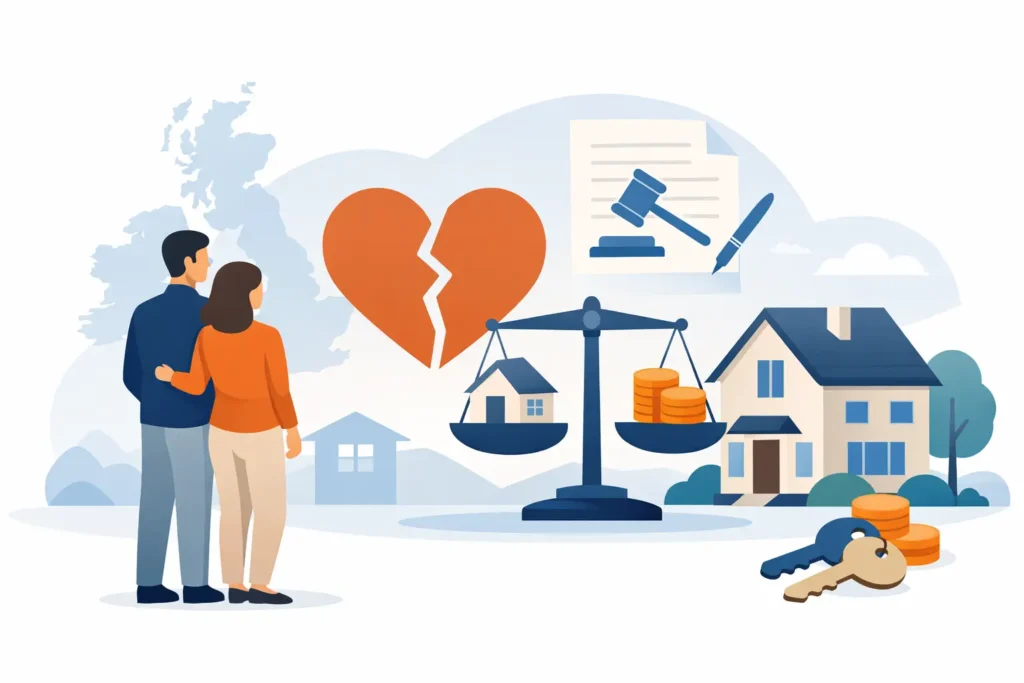
Buying a home, paying the deposit and raising children together can look and feel like a marriage. Legally, however, unmarried couples property rights are often very different. If a relationship ends or one partner dies, the person whose name is not on the title may find that their financial contribution does not automatically give them the security they expected.
For couples in England and Wales, the starting point is not fairness in the broad sense. It is legal ownership, the evidence of each person’s intentions, and the steps they took to record their arrangement. This can be difficult to address after a dispute has begun, which is why clear advice before a purchase, a move-in or a major contribution can make a substantial difference.
There Is No “Common Law Marriage”
Many people believe that living together for a long period creates the same rights as marriage. It does not. The idea of a common law spouse has no general legal status in England and Wales.
Married couples and civil partners have a framework for financial claims on divorce or dissolution. Unmarried partners do not acquire that framework simply because they have lived together, shared bills, had children or described themselves as husband and wife. A court may still be able to determine an ownership dispute, but the route is usually more technical and depends heavily on documents and evidence.
The position can be different in Scotland, where cohabitants have certain statutory rights. Anyone with property or relationship arrangements across UK jurisdictions should obtain advice tailored to the relevant law.
Unmarried Couples Property Rights: Whose Name Is on the Title?
The Land Registry title is the first place to look. Where one person owns a property in their sole name, they are usually the legal owner. That does not always end the matter, but it means the other partner must establish a beneficial interest if they say they are entitled to a share.
Where both partners are registered as owners, they hold the legal title jointly. The next question is how the beneficial ownership is held. This matters when the property is sold, one owner wishes to leave, or a relationship breaks down.
Joint tenants and tenants in common
Joint tenants each own the whole property together. On the death of one owner, their interest normally passes automatically to the survivor, regardless of what a will says. This can suit couples who want the surviving partner to remain fully protected, but it may not suit people who want their share to pass to children or other beneficiaries.
Tenants in common own separate shares, which can be equal or unequal. A 70/30 split, for example, may reflect different deposit contributions. Each person can leave their share by will. For unmarried couples with different financial contributions, this arrangement is often paired with a declaration of trust stating precisely what each person owns and how sale proceeds will be divided.
The terminology is confusing because both arrangements involve joint ownership. The practical difference is significant, particularly on death and when contributions have been unequal.
Contributions Do Not Always Equal Ownership
A partner may have paid towards a deposit, mortgage instalments, renovations or household costs without being named on the title. Whether they can claim a beneficial interest depends on the facts. Courts may consider whether there was a shared intention that the non-owner would have a stake in the property, and whether that person acted to their detriment in reliance on that intention.
Evidence may include a written agreement, messages discussing ownership, records of payments, bank transfers, mortgage documents, or a consistent pattern of financial arrangements. Direct contributions to a deposit or mortgage are often easier to connect to an ownership claim than ordinary spending on utilities, food or day-to-day household expenses. However, every case turns on its facts.
This is not a straightforward calculation of every pound paid in. A partner who has paid a large amount may still face a dispute if the evidence does not show an agreement about ownership. Equally, a person not on the title may have a viable claim where the documents and circumstances show that both partners intended them to share the property.
A claim may be brought under the Trusts of Land and Appointment of Trustees Act 1996, commonly called TOLATA. Such cases can involve questions about whether a share exists, its size, whether a property should be sold, and how sale proceeds should be divided. They are evidence-led, potentially costly and emotionally demanding, so early legal advice is sensible.
What Happens If You Separate?
If you own jointly, neither person should assume they can simply change the locks, sell the home, or remove the other owner from the title. A sale normally requires both owners’ agreement unless a court makes an order. If the relationship has ended and agreement cannot be reached, a TOLATA application may be necessary.
For a property owned in one partner’s name, the position depends on whether the other person can establish a beneficial interest or another legal right. The non-owner may have limited protection even if they have lived there for years. Children can add further considerations, but having children together does not automatically transfer ownership or create the same financial rights available on divorce.
There may be other remedies in particular circumstances. For example, a parent caring for a child may be able to seek provision under the Children Act 1989. This is not a substitute for establishing property ownership and should not be assumed to provide a long-term share of the property.
Where safety is a concern, legal options such as non-molestation orders or occupation orders may also be relevant. Those issues require urgent, individual advice and should be treated separately from the question of who ultimately owns the home.
Death Can Leave an Unmarried Partner Exposed
If a sole owner dies without a will, their unmarried partner does not automatically inherit under the intestacy rules. The estate may instead pass to children or other relatives. This can leave a surviving partner facing uncertainty about their home at a time of bereavement.
Joint tenancy can pass the property automatically to the survivor, but it only deals with that jointly owned asset. It does not deal with savings, a sole-owned property, pensions or other estate assets. Tenants in common will also need suitable wills, as the deceased’s share will pass according to their will or, without one, the intestacy rules.
In some cases, a surviving cohabitant may be able to make a claim for reasonable financial provision from an estate under the Inheritance (Provision for Family and Dependants) Act 1975. Such claims are fact-specific and subject to time limits. They should not be relied on as an alternative to proper estate planning.
Documents That Provide Real Protection
The most useful protection is usually created while a relationship is stable and both partners can make informed decisions. A declaration of trust is particularly valuable when buying a property together, especially where deposits, mortgage payments or intended shares differ. It can record ownership percentages, contributions, what happens if one person pays more towards improvements, and the process for a sale or buy-out.
A cohabitation agreement can go further. It may address household bills, mortgage payments, savings, debts, responsibility for children’s costs, and arrangements if the relationship ends. It is not a magic document: it must be properly prepared, clear and appropriate to the couple’s circumstances. Independent legal advice for each partner is strongly advisable, particularly where one person is contributing significantly more than the other.
Wills should be reviewed at the same time. Couples should also consider life insurance nominations, pension death benefits and whether joint ownership remains appropriate as their family and finances change.
Practical Steps Before and During Co-Ownership
Before completing a purchase, discuss the uncomfortable questions plainly. Who is paying the deposit? Will mortgage payments be equal? Is one person funding substantial works? What happens if one partner wants to sell, cannot work, or contributes less while caring for children? Ambiguity is rarely protective.
Keep clear records of deposits, mortgage contributions and major property expenditure. This is not about treating a relationship like a commercial arrangement. It is about avoiding uncertainty around an asset that may represent most of both partners’ savings.
If you already live in a property owned by one partner, do not assume it is too late to document your position. A cohabitation agreement, declaration of trust, transfer of a share, or new will may still be possible. The right option depends on the title, mortgage lender requirements, tax consequences and each partner’s intentions.
Property arrangements between unmarried couples deserve the same care as the purchase itself. Clear ownership documents and timely advice can protect both partners, reduce the risk of a damaging dispute, and give each person a more secure basis for planning their future.
