
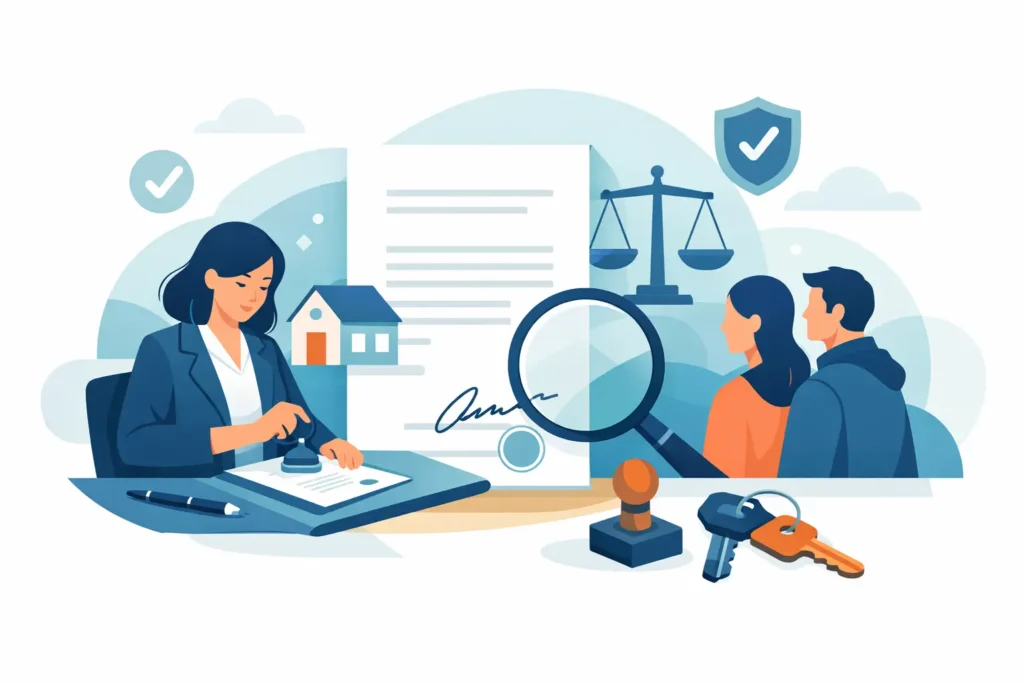
If you have been told that a document must be seen by a notary public, it usually means one thing – the document is going abroad, and the receiving authority wants formal proof that it is genuine. That might involve a power of attorney for a property sale overseas, company papers for an international transaction, or certified copies of personal documents for immigration, study or marriage.
For many people, notarisation is unfamiliar until it becomes urgent. A deadline is approaching, an overseas lawyer is asking for certified identification, or a foreign authority has rejected paperwork because it was signed incorrectly. In those moments, clear advice matters. A notary public does not simply stamp documents. The role is to verify identity, assess capacity and willingness, confirm authenticity where required, and prepare documents in a way that will be accepted in another jurisdiction.
What is a notary public?
A notary public is a qualified legal professional authorised to certify documents, witness signatures, verify identities and prepare notarial acts for use in the UK and abroad. In practice, notarial work is most commonly needed for international matters, where foreign governments, courts, banks or commercial bodies require a higher level of formal certification than an ordinary witness can provide.
This is where misunderstandings often arise. A solicitor and a notary public are not automatically the same thing, even though some lawyers are qualified as both. A document that has been signed before a solicitor is not necessarily sufficient if the receiving organisation specifically requires notarisation. Equally, a commissioner for oaths or a standard certified copy may not meet the standard required overseas.
The value of a notary lies in recognition. Foreign authorities rely on the notary’s official status and record-keeping. That is why precision matters. A minor error in names, dates, passport details or signing formalities can cause delay, rejection or extra cost.
When you may need a notary public
A notary public is commonly needed where documents are being used outside the UK. For individuals, this often includes powers of attorney, passport and ID certification, educational certificates, marriage documents, consent to travel letters, and paperwork for inheritance or property matters abroad.
For businesses, the need can be broader. Companies may require notarised board resolutions, certificates of incorporation, articles of association, commercial contracts, shipping documents, declarations, or documents connected with opening overseas bank accounts or setting up foreign branches.
It depends on what the receiving country and organisation require. Some authorities want an original document notarised. Others will accept a certified copy. Some require the signature to be witnessed in person. Others ask for further legalisation after notarisation, such as an apostille. That is why it is sensible to check the exact wording of the request before the appointment, rather than assuming all certification is treated the same.
What happens at a notary appointment?
Most appointments are straightforward, but they are formal for a reason. The notary public will usually need to confirm your identity, verify your address, review the document to understand its purpose, and check whether any supporting evidence is required.
If you are signing a document, the notary will normally want to see you sign it in person unless the document has already been signed in a way that is acceptable for the intended use. You may also be asked questions to confirm that you understand what you are signing and that you are doing so voluntarily. This is especially relevant for powers of attorney, declarations and documents with significant legal consequences.
For company documents, the notary may need evidence of the company’s existence and authority to act. That can include Companies House records, board minutes, or proof that the signatory has the power to sign on behalf of the business. In some cases, extra checks are needed where corporate structures are more complex or where overseas counterparties have specific compliance requirements.
Preparing for a notary public appointment
Good preparation saves time and reduces the risk of a rejected document. In most cases, you should bring your unsigned document unless you have been told otherwise, along with current photographic identification such as a passport and proof of address such as a bank statement or utility bill.
You should also bring any instructions you have received from the foreign lawyer, court, bank or authority requesting the notarisation. This can be more useful than people realise. If the request specifies the exact wording, form of certification, or whether legalisation is required, the notary can prepare the document correctly from the outset.
If the document relates to a company, bring the relevant company papers as well. If it concerns a personal matter such as a change of name, marriage, study or probate issue, bring supporting documents that explain the background. Not every matter needs extensive evidence, but where the notary can see the context clearly, the process is usually smoother.
Notarisation, certification and legalisation
One of the most common points of confusion is the difference between notarisation and legalisation. They are related, but they are not the same.
Notarisation is the act carried out by the notary public. The notary verifies identity, witnesses signatures where appropriate, certifies copies or prepares a formal notarial certificate. Legalisation is the next step where a government authority confirms the authenticity of the notary’s signature and seal for use overseas.
In many cases, this legalisation takes the form of an apostille. Whether you need one depends on the country where the document will be used. Some countries accept the notary’s seal alone. Others require an apostille, and some may require further embassy or consular authentication after that.
This is where practical advice matters. If you obtain notarisation without checking whether an apostille is also needed, you may lose time. If you pay for legalisation when the receiving authority does not require it, you may spend more than necessary. The right route depends on the country, the document and the purpose.
Why getting it right first time matters
Notarial work is often connected to deadlines that are not flexible. A property completion overseas, a visa application, a school enrolment, a business filing or a court requirement may all depend on one document being accepted without challenge.
Problems usually arise from small mistakes. Names that do not match passports exactly, missing middle names, expired ID, documents signed too early, or the wrong form of certification can all cause difficulty. In cross-border matters, even a minor discrepancy can lead to further questions because the receiving authority does not know you personally and relies entirely on the paperwork.
That is why a careful, client-focused approach is worth more than a quick stamp. A good notary public will want to understand where the document is going, who is asking for it, and whether any further steps are needed. That protects the client from repeat appointments and unnecessary delay.
Choosing a notary public
When choosing a notary public, look for more than availability. You need someone who is responsive, precise and used to handling both personal and commercial documents. Cost matters, but so does clarity. It helps to know in advance what documents to bring, how fees are structured, whether legalisation can be arranged, and how quickly the work can be completed.
For clients already dealing with related legal issues, there can be real value in using a firm that understands the wider context. A notarial document may sit alongside a property sale, probate matter, immigration application or commercial transaction. Where that happens, joined-up legal support can make the process more efficient and less stressful. Firms such as White Horse Solicitors & Notary Public often assist clients who need both notarial services and wider legal guidance under one roof.
Notary public services for individuals and businesses
Although the same legal principles apply, the experience can differ depending on whether you are acting in a personal or business capacity. Individual clients often need reassurance and practical guidance because the process is unfamiliar. They want to know what to bring, what the document means, and how quickly it can be dealt with.
Business clients are often more focused on timing, volume and accuracy across multiple documents. They may be working to a transaction timetable or dealing with overseas counterparties in different jurisdictions. In those cases, efficiency matters, but accuracy still comes first. A rushed notarisation that is rejected later is rarely a saving.
The most useful approach is usually straightforward and tailored. Identify the receiving authority, check the formal requirements, prepare the documents carefully, and deal with any apostille or legalisation needs without guesswork.
If you need a notary public, the best first step is not to rush to sign anything. Gather the documents, check the instructions from the organisation requesting them, and take advice early. A short conversation at the start can prevent wasted time, extra cost and a great deal of avoidable frustration later.
